You would think that after failing six times, the plotters would have given up. But they didn’t. Maybe there’s something about the excitement of the whole thing that appeals to certain people. Whatever their reasons were, the seventh coup attempt was the biggest and most deadly of them all. It lasted for nine days, and by the end of it, ninety-nine people were dead.
I was in Manila when it broke out, not far from where the insurgents were marching and shooting. Many of my friends lived much closer. And since the rebel forces were on the move, we were advised to stay inside. It was sort of like a COVID lockdown except this was 1989 not 2020. We didn’t have cell phones or Zoom or Netflix.
So how did we entertain ourselves? We called each other, and we watched TV news, and we looked out the window. In my apartment building, we stood on our balconies and went up on the roof. Since our building was twenty stories high, we had a good view.
The thing about human beings: we’re incurably curious, even when it might be a bad idea. For example:
- I’ve gone down to the beach to see the big waves rolling in as a typhoon approached.
- I’ve stood on the rim of an active volcano.
- And I went up on the roof to watch the opposing forces fly over.
Here’s something I wrote in my journal during the coup attempt:
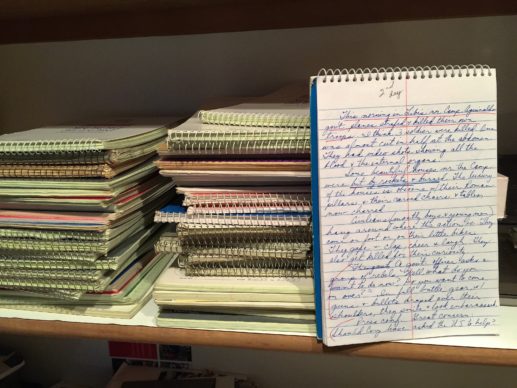
“There’s a party atmosphere on the roof, people craning their necks as the jets fly over, laughing, looking through binoculars, enjoying being together. We’re usually so isolated in our apt.-cells …
… We saw fires which appeared to be at Camp Aquinaldo or Camp Crame. We saw 3 tora-toras flying high. Perry thought she saw one shot down … In the afternoon, 2 phantom jets kept flying over.”
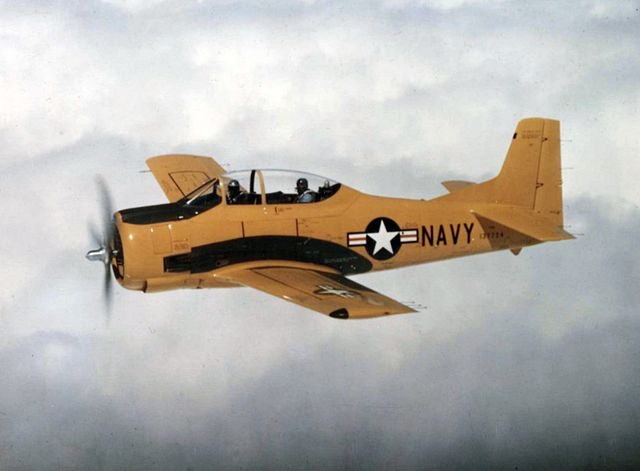
A word about the planes: We saw F-5 jets flown by the Philippine Air Force. Later President Cory Aquino asked for help from the Americans at Clark Air Base, and they sent F-4 phantom jets. The rebels, on the other hand, only had small, old-looking planes. Everyone laughingly called them tora-toras because they looked like the planes the Japanese flew during WWII.
When rebel forces escaped into Makati, putting my friends, foreign businessmen, and tourists at risk, the focus shifted from the sky and the army bases to something more personal to some of us.
I’m tempted to quote more passages from my journal and fill them in with the history and results of these nine days of strange and daunting events—the spectacle of snipers on the roofs of 5-star hotels in the international business district, the marking by rebels of the houses where Americans lived, the battle victories and losses, the boredom and the fear.
It’s a complicated story, though, too long for a blog post. In previous posts, I wrote about some of these events. See: http://nickichenwrites.com/wordpress/philippines/an-assassination-martial-law-and-a-revolution-part-1/ and http://nickichenwrites.com/wordpress/writing/journal-entries-on-a-coup-detat/
I also included a fictionalized version of the seventh coup attempt in my novel, When in Vanuatu.
P.S. – The seventh wasn’t the last coup attempt against President Corazon Aquino. There were two more: the Hotel Delfino siege in Cagayan’s capital and an army mutiny in Mindanao. None of them were successful.
I still don’t understand why insurrectionists would want to rebel against a good, democratically elected president when they’d tolerated the Ferdinand Marcos dictatorship for so many years. People are strange.




Wow, Nicki. Thank you for sharing your thoughts and observations.
(I also think it’s quite amazing that you’ve kept such detailed journals.)
I kept journals only for a few years. It was during the time that I was just getting started writing and was working on an MFA. When we moved to Vanuatu and everything was new to me, it was a good time to record my impressions. I don’t think I’d have as much to write now,
I think the boredom and the fear would have done me in. It’s exciting to read about your experiences now, but to live them at the time… you’re made of sterner stuff than I.
Besides having nothing to do during the coup, it interfered with our plans. My husband was in Japan on business, and I was planning to fly to Vermont for my Winter Session for my masters at Vermont College of Fine Arts. I was all packed, but the airport was shut down. The fighting was too close to it. Repeatedly calling the airport for news was one of the most nerve wracking things for me.
I remember this from When in Vanuatu! Lately I read that Marcos Jr. is going to run for president? And I guess some people will vote from him! Well, he’s not his father, but still… it’s weird!
I’m mot plugged into the rich and ruling class, but I’ve noticed that the ties are tight and long-lasting. It started with the Spanish conquistadores way back in 1565 led by Lopez de Legazpi, a name you still see in prominent places. One virtue Filipinos seem to excel at is forgiveness, so I guess I’m not surprised that Marcos Jr. is running.
Some things never change!
We’ve always had wars and power struggles and people who join up just for the excitement. And yet, sometimes it’s still hard for this small town girl to believe it will happen in my time and place.
I remember reading your “fictionalized” account in your book “When in Vanuatu” and being mesmerized, knowing it was more truth than fiction. Your described it so well. No, I don’t think we understand people, and especially those who crave power from dictators like Putin (who is beyond frightening) to the poor person who thinks power will keep him/her from poverty and starvation. But power only eats us up form the inside (from my perspective, anyway). Thanks for this fascinating post, Nicki.
I read something interesting this morning by a sociology professor. She was writing about Russian oligarchs and their love of power and money. What is an oligarch without ostentation? Oligarchs, she says, “need not just to be filthy rich; the need to be seen as such seems to only increase with economic wealth.” It sounds to me like too much work. I’d rather stay home and read and write and visit with my family and friends.
My younger self would have joined you on the roof!
Today? Perhaps.
What I’d like to see right now? A coup in Russia. Some people in power abuse power and need to be evicted!
I’d like to see a coup in Russia too. They seem to work well in some countries, mostly, though, in countries in which the leadership has only a tentative hold on power. Putin is making sure that’s not the case for him. Even gentle little Cory Aquino, a woman who was new to power, was able to hold on despite 9 coup attempts. But I agree, Putin needs to be evicted.
If the experience is shared with our peers, it starts to feel almost normal. I was only a teenager when we experienced 2 coups in Bangladesh, but I can easily imagine being an adult and seeking the high ground to find out what was going on. We heard a tank rumble up our road and take out a house nearby (where relatives of the deposed leader lived). In some ways, I think seeing is less frightening than only hearing, as our imaginations can fill in the gaps in quite terrifying ways. Glad you used the experience in a book, I’ll seek it out.
Thank you, Debs.
When you hear a tank rumbling down your road and nothing happens to you, you may start to feel safe.
My husband was caught in a coup in Bangladesh. He was in Dacca. All I remember from what he told me was something about people tying sheets together to get out the window of the hotel. I don’t think that was him. I think he saw them. (I don’t remember much when I don’t write it down. Ah! the benefits of a journal.)
He would have been there at the same time as my family then. We were outside of the city centre in a residential enclave, so our impression of being safe was doubtless higher than his and others right in the middle of it. That said, we’d come from civil war in Nigeria, so we had some idea of the nuances of safety in such circumstances.
Oddly, after the coup was over, the car I was travelling in was hit by an accidental gun discharge, which was certainly sobering. Quite the world we live in.
You had an exciting childhood, Debs. Nigeria’s civil war must have been frightening. Our kids lived through a few exciting events in Manila, but I think a lot of it went over the top of their heads.
Yes, it’s quite the world we live in.
Power corrupts. Just having a chat about how much corruption is in the the country where I currently reside. It’s the every day people who suffer for these decisions.
Great idea to fictionalize your experience in WiV, too. What a wealth of experiences you’ve had!
Power and money corrupt. And corruption corrupts because you have to keep up with the other rich, corrupt people. If you get invited to their lavish party, you have to invite them to a comparable party, and on and on. Under Pres. Ferdinand Marcos, the poor were really poor, esp. the poor farmer workers.
This is such a timely reminder of humanity’s penchant for watching disaster
Your comment makes me think about the various motives for watching a disaster. I think in Manila, since the disaster was so close and civilians were in danger, the motive was mixed: keeping safe, watching an exciting event, and sharing an experience. For me, watching what’s happening in Ukraine is mainly sympathy but also fear that the war might spread.
AS I was reading this I thought it would make a good book…then I got to the part where you’d already used your experience as the basis for a fictionalized version. It’s interesting to see our younger thoughts on paper when we’re old enough to understand the dangers we were in that we might not have understood at the time isn’t it.
I don’t actually think of myself as much of a risk taker, but things begin to feel normal when you’re in the middle of them. My late husband was quite a careful person who also liked to be in the middle of the action. And he loved his job for the Asian Development Bank which put him in the middle of all kind of action in countries around Asia. I think we’re all full of lots of contradictions.
I’m always fascinate by what people believe. If something is told to them by someone they like, they will automatically believe it even if it’s not true. Even if any rational reasoning tells them it’s not true. People are strange.
I used to think that people in general were fairly rational. But the last five or six years have been a shock to me. Even though I was familiar with a few psychological studies that revealed how often we’re influenced by something that has noting to do with logic. Logic was my easiest subject in college. But Psychology is more fascinating.
Timely recollections, as the war rages in Ukraine. Strange times. The devestation on life by the power hungry!
Ferdinand Marcos was in power in the Philippines for more than twenty years. Like Putin, he and his wife, Imelda, got rich off the people. But he was a small-time power-hungry kleptocrat in comparison to Putin. Some of his followers must have become accustomed to the reflected power and financial gains. I think the majority of those who joined the coups just went along with their buddies and enjoyed the excitement and notoriety. They loved posing for the cameras. Even as they surrendered, they were smiling and waving.
People aren’t always rational. Republicans have spent decades persuading various Americans to vote against their own economic self interest. There was a recent study in Germany where some participants believed Russian misinformation and propaganda even after they were told it was false.
And I’d might also want to look at giant waves up close.
As I remember, the waves we’re quite as big as the radio warned. Isn’t that the way with weather reports?
There are so many examples these days: people dying of COVID who don’t believe it’s real, Russians who won’t believe their children and friends living in Ukraine that Russia is invading …
People are indeed strange, Nicki. It’s sad.
As a former teacher, I wish we could teach the kids to think straight.